What if your next home could help pay its own mortgage? In Lawndale, that idea is more realistic than you might think. With a large share of renters and steady demand for modest, well-located units, house hacking can reduce your monthly costs while you build equity.
In this guide, you’ll learn the best live-in investment setups that work in Lawndale, the city’s ADU rules, financing options, tax points, and a step-by-step plan to get started. You’ll also see common pitfalls to avoid so your plan pencils out and stays legal. Let’s dive in.
What house hacking means in Lawndale
House hacking is simple. You buy a home you can live in and rent out part of it to offset the mortgage. In Lawndale, that could be a duplex, a single-family home with an ADU, or even spare bedrooms.
Lawndale is a compact South Bay city with about 31,800 residents at the 2020 Census. The population size and location mean steady demand for smaller, budget-friendly rentals. You can confirm the city snapshot in the Census Bureau’s QuickFacts for Lawndale.
Average asking rent in Lawndale was about $1,895 as of February 21, 2026, according to RentCafe. That local rent context helps you estimate income from a unit, an ADU, or a room. Always compare against fresh comps before you buy.
Best property types for live-in investors
2–4 unit small multifamily
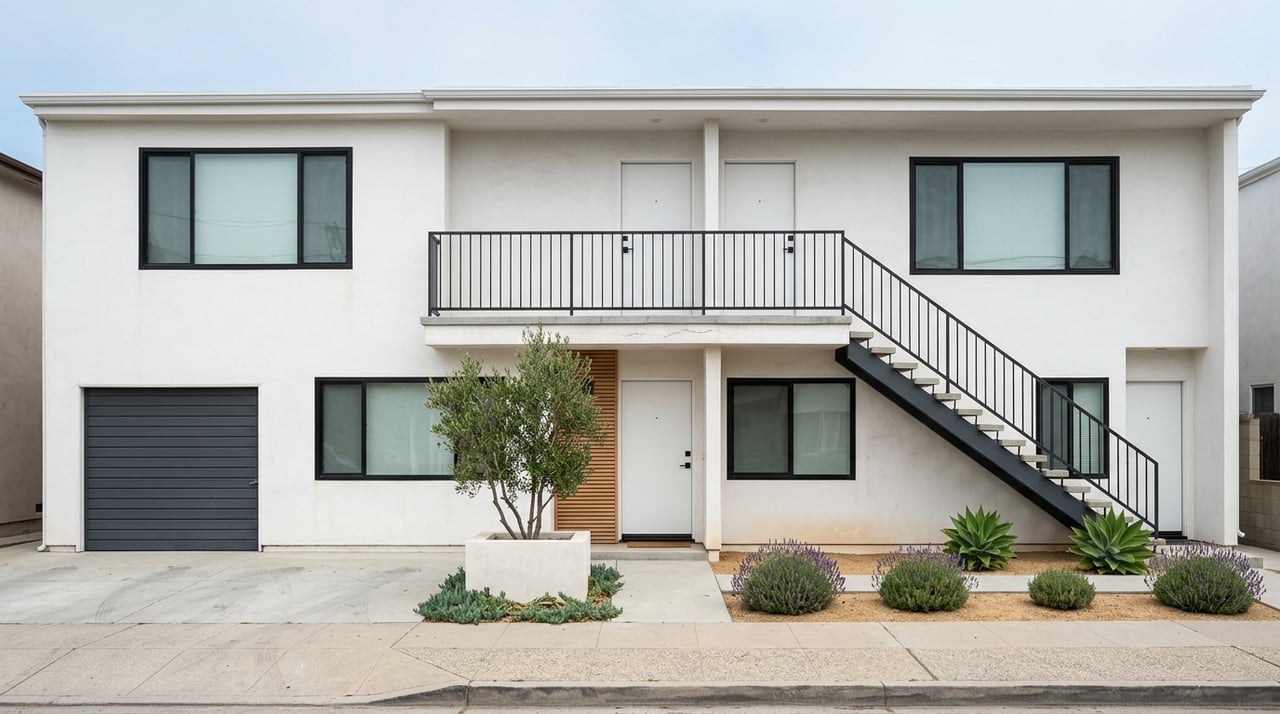
Buying a duplex, triplex, or fourplex and living in one unit is a classic house hack. Lenders often allow owner-occupied financing on 2–4 unit properties, and in many cases you can count a portion of the other units’ projected rent to qualify. You get diversification across units, which can smooth out vacancy risk.
What to watch:
- Review leases, rent rolls, and utility bills if the property is already rented.
- Budget for common-area maintenance and systems like the roof or main sewer line.
- Ask how the appraiser will value income and whether any unpermitted work exists.
Single-family home with an ADU or JADU
Buying a single-family property and adding an accessory dwelling unit can create a strong long-term setup. You live in the main home and rent the ADU. Lawndale aligns with California’s ADU law and provides a published standards sheet and ministerial approvals for compliant projects.
What to watch:
- Confirm setbacks, height, and size limits before you design.
- Check if you qualify for a parking waiver based on proximity to transit.
- Plan for deed restriction recording and a minimum 30-day rental period for the ADU.
Renting spare rooms in a larger home
If you are not ready for multiple units or an ADU, renting one or two bedrooms can ease your payment. Room rentals often come with a lighter permitting burden. Confirm insurance coverage and local landlord-tenant rules before you list a room.
Know Lawndale’s ADU rules
Lawndale’s code and guidance make ADUs a permitted pathway, with a few key requirements you should know up front:
- Minimum rental term: ADUs and JADUs cannot be rented for fewer than 30 days. Short-term rental strategies are not allowed for ADUs. See the municipal code summary for details.
- Parking: The baseline is one parking space per ADU. Parking can be waived in several cases, including when the ADU is within one-half mile of public transit or is part of the primary residence.
- Deed restriction: You must record a deed restriction stating the ADU cannot be sold separately and memorializing rental and size limits. Expect this during permit processing.
- Sizing and placement: The code sets floor area limits for attached and detached ADUs, reduced setbacks for conversions, height caps, and architectural compatibility standards.
- Multifamily lots: Recent ordinance updates allow multiple detached ADUs on some multifamily parcels, subject to caps tied to existing units.
- Process: The city uses ministerial review for compliant ADUs and provides checklists to speed approvals.
Learn more in Lawndale’s residential development and ADU standards page and the municipal code sections on ADUs:
- Review Lawndale’s residential development and ADU standards on the city website.
- See the municipal code sections that govern ADUs and JADUs.
Rents, prices, and setting expectations
To model a plan, anchor your assumptions in current local data:
- Average rent: About $1,895 in Lawndale as of February 21, 2026 (RentCafe). This can provide a helpful benchmark for a small unit or ADU, but always compare to current local listings and an appraiser’s rent schedule.
- Home values: Market pricing in Lawndale reflects coastal adjacency and low inventory. Recent public snapshots showed a median sale price near $695,000 in February 2026 and a separate broad value measure around $771,641 through February 28, 2026. Use these figures only as ballpark inputs and confirm the latest numbers before you write an offer.
Your net housing cost depends on down payment, interest rate, taxes, insurance, and realistic vacancy and maintenance assumptions. A conservative pro forma is your best friend.
Financing options that help house hackers
Owner-occupant financing on 2–4 unit properties and ADU-friendly underwriting can open doors. Here are the big points to discuss with your lender:
- Conventional 2–4 units (Fannie Mae): Fannie Mae updated eligibility in late 2023, which is why many borrowers now see options like 5 percent down on owner-occupied 2–4 unit purchases. Always confirm current terms with your lender because overlays vary.
- FHA 1–4 units: FHA allows owner-occupied financing for up to four units and can use projected rent from the other units to help you qualify. For triplex and fourplex purchases, lenders apply a self-sufficiency test and count a discounted share of rents per the FHA handbook.
What underwriters typically ask for:
- Occupancy plan: Many programs require you to move in within a set timeframe (often about 60 days). Confirm the timeline and any owner-occupancy period.
- Rental income documentation: Be ready with current leases or an appraiser’s market rent schedule. Lenders often apply a vacancy factor when counting rent.
- Reserves and down payment: Expect reserve requirements for 3–4 unit loans. Do not rely on generic down payment figures. Get a pre-approval that reflects your credit, income, and assets.
- Appraisal approach: Small multifamily appraisals use income methods and specific forms. Ask how an ADU or converted space will be valued.
- Lender overlays: Many lenders add their own rules on top of agency guidance. Choose someone experienced with 2–4 unit and ADU loans in Los Angeles County.
Helpful references:
- See Fannie Mae’s program changes that expanded access for owner-occupied 2–4 unit loans.
- Review FHA’s Single Family Housing Policy Handbook for rental income and self-sufficiency details.
Taxes, assessment, and insurance basics
Taxes and insurance can change the math. Plan ahead and talk with a qualified advisor.
- Reporting rental income and expenses: You must report rent you collect. Ordinary and necessary expenses can offset that income. Residential rentals generally use 27.5-year depreciation for the building. See IRS Publication 527 for the rules and examples.
- Selling later: If you rented part of your property, the primary residence exclusion may not cover depreciation. Depreciation taken or allowable since May 6, 1997 is subject to recapture. Review IRS Publication 523 before you plan an exit.
- Property tax assessment for ADUs: In Los Angeles County, an ADU is typically treated as new construction for assessment. The ADU portion is reassessed and you may receive a supplemental bill, while the original home’s base value can remain under normal Prop 13 rules. See the County Assessor’s ADU overview.
- Insurance and liability: Standard homeowners policies may not cover tenant-occupied spaces. Ask your insurance agent about a landlord endorsement or a policy tailored to owner-occupied properties with rental units. Confirm coverage early in design or during escrow.
Due diligence checklist before you buy or build
Use this list as a starting point to keep your plan on track.
Property and planning checks:
- Confirm zoning and allowable unit types for your parcel. Start with Lawndale’s residential development and ADU standards.
- For ADUs, verify size limits, setbacks, height, parking exceptions, deed restrictions, and the minimum 30-day rental rule. Review the municipal code sections that apply.
- If buying a 2–4 unit, request leases, a rent roll, expense history, and recent utility bills. Ask about any unpermitted work and unit habitability.
Lender questions to bring to pre-approval:
- Which programs do you offer for owner-occupied 2–4 unit purchases, and what are the down payment and reserve requirements for each?
- Will you count projected ADU or non-occupant unit rents to qualify me? What documentation and vacancy factor will you use?
- Which appraisal form will be used, and how will an ADU be valued in the report?
- Do you have any local overlays for Los Angeles County or for properties with prior unpermitted work that was legalized?
Tax and assessment planning with a professional:
- How should I allocate expenses and depreciation between my living space and rental space?
- If I add an ADU, how will my property taxes change and what should I expect in a supplemental bill?
- How might depreciation affect my eligibility for the primary residence exclusion when I sell?
Local contacts and resources:
- Lawndale Community Development and Planning for ADU checklists and residential standards.
- Los Angeles County Assessor for ADU assessment guidance and supplemental bill timing.
Pitfalls to avoid
- Unpermitted units: These can block financing, raise insurance issues, and lead to costly retrofits. Verify permit history and legalization steps.
- Short-term rental assumptions: ADUs and JADUs in Lawndale cannot be rented for fewer than 30 days. Plan for long-term leases only for ADUs.
- Optimistic rent numbers: Use current local comps and apply a cushion for vacancy and maintenance in your pro forma.
- Property tax surprises: Adding an ADU increases assessed value for that improvement. Budget for the higher tax bill and possible supplemental assessment.
A simple path to get started
- Get pre-approved with a lender who regularly underwrites 2–4 unit and ADU properties in Los Angeles County.
- Tour properties that match your plan. For single-family options, evaluate ADU feasibility on-site with basic checks on setbacks, access, and utilities.
- Build a conservative pro forma. Use current rent comps, include a vacancy factor, and estimate realistic operating costs.
- Write offers with clear assumptions. If you plan to legalize existing space, include due diligence periods for city consultations.
- After closing, finalize design and permits if you are building an ADU. Record required deed restrictions and keep all approvals on file.
- Line up the right insurance before you place a tenant. Set lease terms that align with the 30-day minimum for ADUs.
House hacking in Lawndale can be a smart path to lower housing costs and faster equity growth. When you combine a legal structure, realistic numbers, and the right property, you give yourself room to breathe financially. If you want local guidance on neighborhoods, ADU-friendly lots, and small multifamily searches, connect with the South Bay experts at the Steve and Helen Nimeh Real Estate Group to get started.
FAQs
What is house hacking and how does it work in Lawndale?
- You live in one part of a property and rent out the rest, such as a unit in a duplex, an ADU behind a single-family home, or a spare bedroom. Lawndale’s ADU rules support long-term rentals with a 30-day minimum for ADUs.
Can I run a short-term rental from an ADU in Lawndale?
- No. Lawndale’s code requires a minimum rental period of 30 days for ADUs and JADUs, so short-term rentals are not allowed for ADUs.
How much down payment do I need for a duplex or triplex in Lawndale?
- Many lenders now offer owner-occupied conventional financing on 2–4 unit properties with options as low as about 5 percent down, and FHA is also available. Terms vary by lender, so get a current pre-approval.
Will building an ADU increase my property taxes in Los Angeles County?
- Yes, the ADU portion is typically treated as new construction and is reassessed, which can lead to a supplemental bill, while your main home’s base value may remain under normal limits.
Can projected rent help me qualify for a mortgage on a 2–4 unit property?
- Often yes. Lenders may use an appraiser’s market rent schedule or existing leases and then apply a vacancy factor, with specific rules for FHA triplex and fourplex self-sufficiency tests.
What insurance do I need if I live in the home and rent part of it?
- Ask your agent about a homeowners policy with a landlord endorsement or a policy designed for owner-occupied properties with tenants, and confirm coverage for ADUs or rented rooms.